Snowflake outage: what a cloud incident reveals about your dependencies
Snowflake logged incident INC20000199 between 07:00 and 08:30 UTC, affecting service availability. The Snowflake outage is a useful reminder that data processes also need a plan for when the platform does not respond.
News summary
According to the provider's own status page, incident INC20000199 ran roughly between 07:00 and 08:30 UTC. We stick to that confirmed fact: there was a window of degradation followed by recovery. We do not speculate about causes the provider has not detailed publicly.
Ninety minutes sounds like very little. It stops sounding that way when the window overlaps with the overnight load feeding the morning dashboards, with the synchronisation supplying an ERP, or with the process that calculates prices and stock before opening. The impact is not measured in minutes of downtime, but in processes arriving late in sequence.
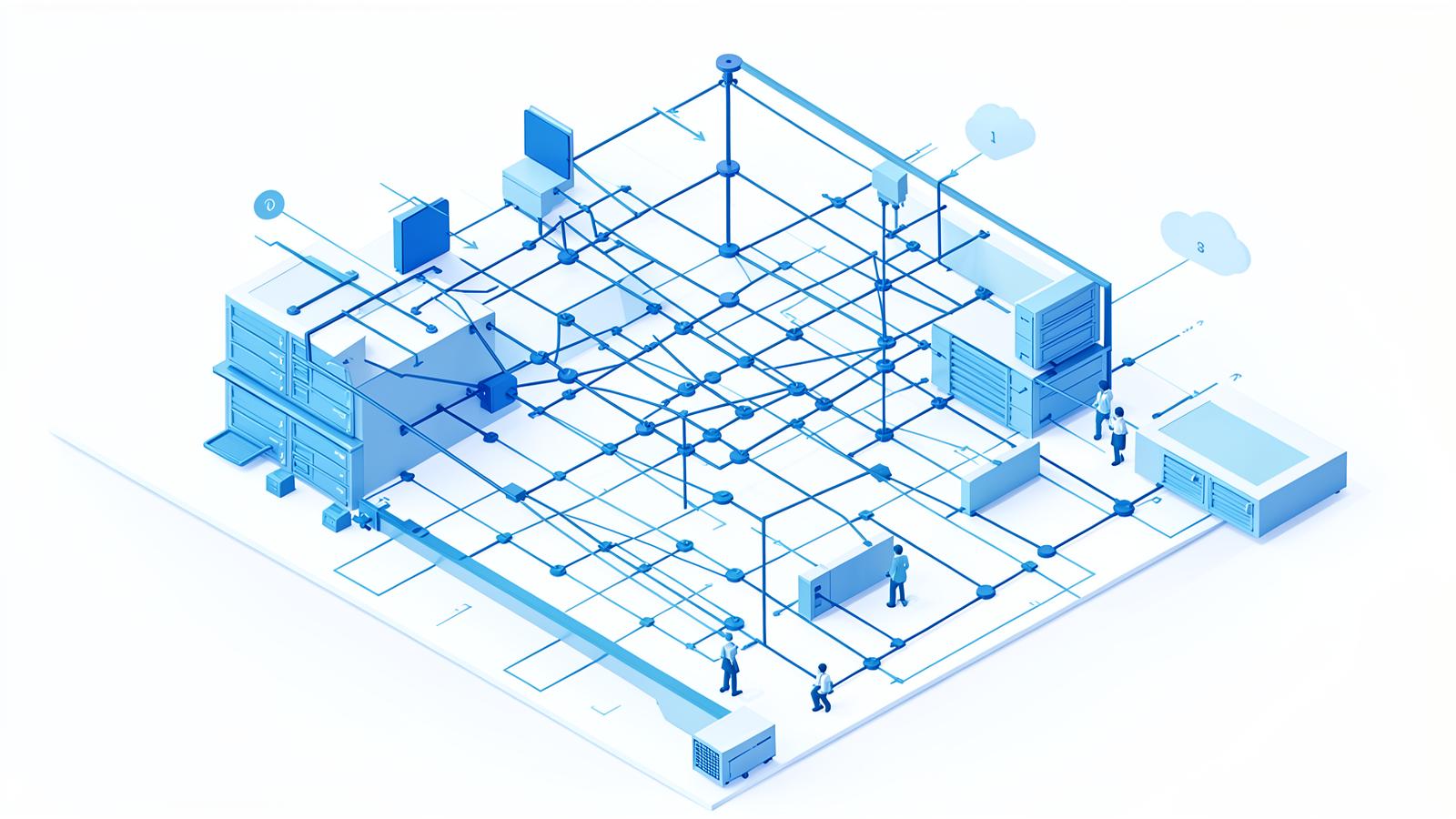
Seintec's analysis is that in today's data architectures the risk has shifted: it is no longer in the server, it is in the chaining. A delay at source propagates to ingestion, transformation, reporting and the decisions that rely on them. Many organisations have no visibility of that chain until it breaks.
There are simple, effective measures. Scheduling retries with progressive back-off stops a transient failure from leaving a process down all morning. Designing idempotent loads allows a rerun without duplicating data. And alerting on process delay, not only on error, catches the problem before the board does.
It is also worth deciding in advance what happens to information while the service is unavailable: whether it is discarded, queued or held in intermediate storage for later reprocessing. Making that decision calmly saves manual reconciliations.
No provider offers absolute availability, and it is not reasonable to demand it. What is reasonable is to know the contracted SLA, know which of your own processes depend on it and have written down what happens during the window when it does not respond.
Source: Snowflake Status / Keboola — 4 September 2026
Why this matters to a company operating in Spain
The cloud has ceased to be a technological decision and has become a business one: it affects monthly costs, the speed of service delivery, and the ability to recover operations after an outage. The companies achieving the best results are not those that migrate fastest, but those that migrate with clear criteria, workload by workload.
Read from this perspective, the relevance of this news is not the technology itself, but what it enables a mid-sized company to do differently: reduce costs, gain elasticity during peak periods, or simplify the management of hybrid environments.
Real business impact
Before deciding on an investment, it is advisable to identify what is at stake. In cloud services projects, we typically review these four areas with management and the IT manager:
- Cloud invoices growing uncontrollably due to oversized resources or systems left running out of hours.
- Dependence on a single provider without an exit plan or off-platform backup.
- Degraded latency and user experience when data and applications are not closely located.
- Default configurations that leave storage or consoles exposed to the internet.
Five-step action plan
A useful plan fits on one page. This is the roadmap we apply with our clients to move from news to measurable improvement, without disrupting daily operations:
- Map the full data chain: source, ingestion, transformation, consumption and the decisions that depend on it.
- Classify which processes tolerate delay and which do not, and document the business impact of each.
- Implement retries with progressive back-off, idempotent loads and intermediate queues so no information is lost.
- Alert on delay and on missing data, not only on technical errors.
- Review the provider SLA and subscribe to its status page with notification to the on-call team.
Key indicators you should be measuring
What is not measured is not managed. These indicators allow you to verify if the technological investment is yielding results and serve as the basis for the periodic reports we deliver to our clients:
- Maximum tolerable delay per data process (data RTO).
- Percentage of loads with automatic retry and idempotent design.
- Minutes between the start of a provider degradation and the internal alert.
- Number of manual reconciliations needed after each incident.
How we approach it at Seintec: Cloud Services
Cloud services to scale your business. We operate from our own datacenter in Spain, with a certified technical team and a single point of contact who knows your infrastructure, so you do not have to explain your environment every time an incident arises.
These are the capabilities we bring to the table in a cloud services project:
- Cloud servers and VPS: Dedicated resources, scalable on the fly.
- Private cloud: Isolated environments on our platform.
- Hybrid cloud: Integration with your on-premise systems.
- Migrations: Planned, with pilot testing and minimal windows.
- Secure connectivity: VPN and controlled access between sites and users.
- Cost optimisation: Continuous review of actual consumption.
What you gain by working with a technology partner
Outsourcing does not mean losing control: it means gaining predictability, coverage, and independent technical insight. These are the benefits our clients highlight:
- Bespoke architecture: Private and public cloud combined so that each workload runs where it should.
- Zero Trust security by design: Identity, access, and data shielded to ISO 27001/27018 and GDPR standards.
- 24×7 monitoring and expert support: Our NOC monitors performance and costs while the senior team resolves incidents in minutes.
- Costs under control: Pay only for the resources you use and eliminate unforeseen hardware investments.
Frequently Asked Questions
- How long did the Snowflake incident last?
- The provider logged incident INC20000199 with a window of roughly 07:00 to 08:30 UTC. That is the confirmed figure on its status page; the detail of the causes has not been made public.
- Does it make sense to replicate data on another platform just in case?
- Only when the cost of downtime exceeds the cost of duplication. For most SMEs it is more cost-effective to design delay-tolerant processes and keep source data for reprocessing than to maintain a second platform in parallel.
- Public, private or hybrid cloud?
- It depends on each workload. We analyse performance, cost, legal requirements, and dependencies, proposing the model that best balances the four; for many Spanish SMEs, the result is hybrid.
- Where should a company wanting to address cloud services begin?
- With an audit of the current environment. At Seintec, we perform an initial no-cost review that identifies risks, dependencies, and priorities, resulting in a phased plan with fixed deadlines and budgets.
- Is it necessary to halt business operations during the project?
- No. We plan migrations and changes within agreed windows, with prior pilot tests and rollback options, ensuring disruption is minimal or non-existent for users.
- What type of companies do you serve?
- SMEs and mid-market companies in sectors such as industry, automotive, logistics, retail, legal, and healthcare, with both on-premises and hybrid cloud infrastructure.
- What coverage and response times (SLA) do you offer?
- Support from Monday to Friday, 09:00 to 18:00, and 24x7 emergencies 365 days a year, with a committed response SLA and a 99.98% service SLA in 2025.
If your decisions depend on data travelling across several platforms, it pays to know where the chain breaks. At Seintec we audit your cloud architecture and its dependencies and propose concrete resilience improvements. Request a cloud audit.
Contact SeintecRelated service
Cloud Services
Cloud services to scale your business.