
Cisco vulnerabilities September 2026: critical flaws in IOS XR and Nexus 9000
Cisco has released security advisories with a score of 9.8 out of 10 affecting IOS XR and Nexus 9000 equipment with Silicon One. The Cisco vulnerabilities of September 2026 necessitate a review of network equipment patching, not just server maintenance.
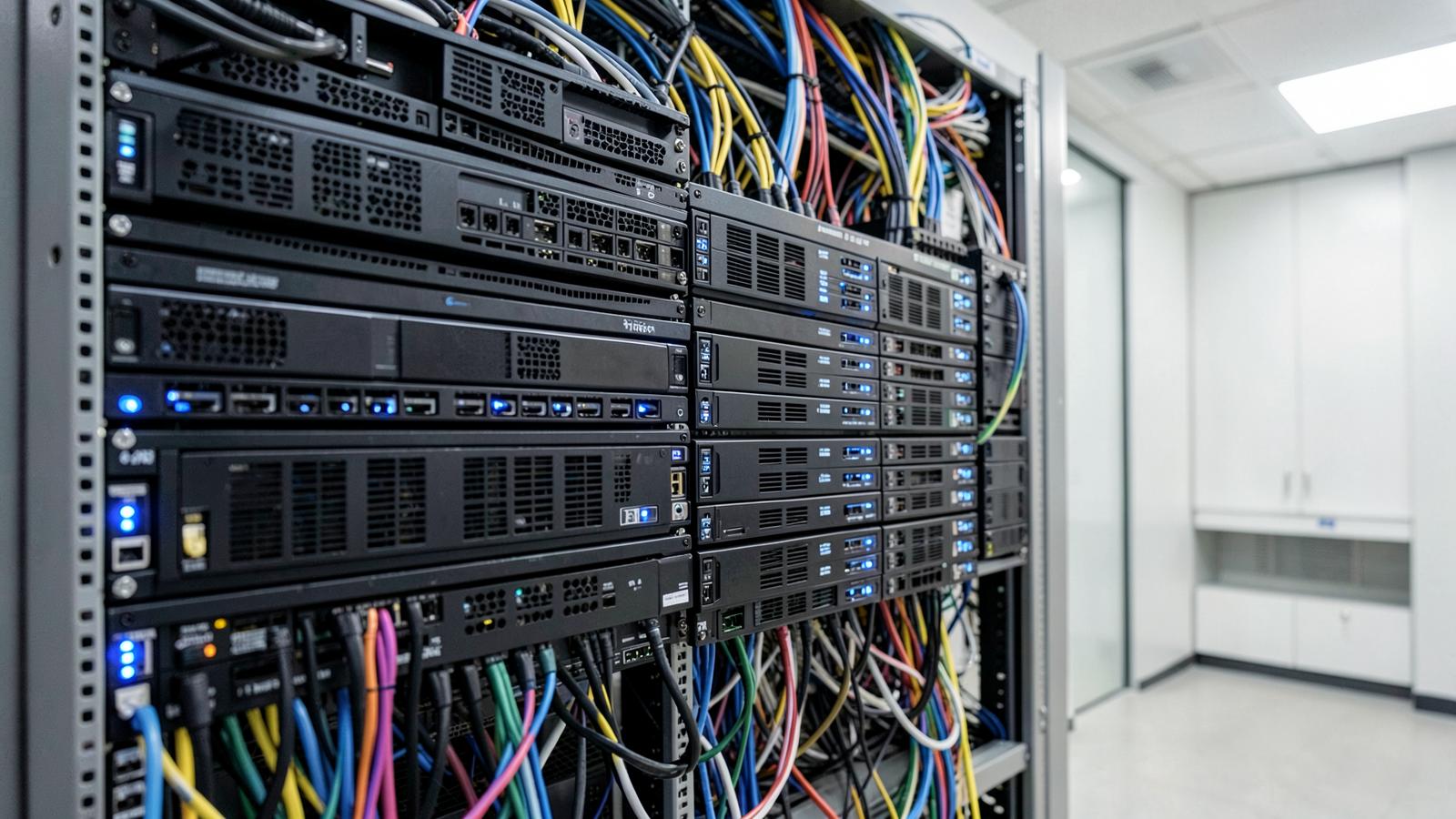
News summary
The manufacturer has reported vulnerabilities with a severity of 9.8 out of 10 in IOS XR software and Nexus 9000 switches equipped with Silicon One. A score of this level means, in practical terms, that the flaw can be exploited remotely and with low complexity.
The peculiarity of network equipment is that it rarely enters regular update cycles. Servers and workstations are patched with a degree of discipline; switches and routers, by contrast, have often been running for years without being touched because any change implies a service window and a risk of downtime.
This reasoning, while understandable, leaves a significant blind spot: a compromised network device does not just affect one application, it affects everything that passes through it. It allows for traffic observation, route alteration, or serving as a stable foothold to move through the infrastructure without being detected by tools focused on the workstation.
Our recommendation is to prioritise by exposure rather than severity. A device with a management plane accessible from the internet or the user network is urgent. One with management restricted to a dedicated network allows for more orderly planning.
While the update is being planned, mitigation measures provide real value: limiting management plane access to specific addresses, disabling unused services, reviewing local accounts, and enabling event logging to a central system.
And a methodological note: it is advisable to know at all times which version each device is running. Many organisations discover they are unaware of this on the very day a critical alert is published, turning a task of hours into a project of weeks.
Source: Cisco — 2 September 2026
Why this matters to a company operating in Spain
The threat landscape affecting Spanish companies no longer distinguishes by size. Attacks are automated, sold as a service, and seek the shortest path: a reused credential, an unpatched server, or a provider with poorly controlled remote access. For an SME, the difference between a minor scare and a multi-day shutdown almost always depends on decisions made before the incident.
That is why every industry update should be read in operational terms: which specific controls would have prevented the problem, what evidence must be preserved, and who makes the decision when the clock is ticking. This is the approach we apply to managed cybersecurity projects at Seintec.
Real business impact
Before deciding on an investment, it is advisable to identify what is at stake. In connectivity and telecommunications projects, we typically review these four areas with management and the IT manager:
- Operational disruption: orders, invoicing, or production halted while systems are restored.
- Loss or exposure of personal data, with a mandatory 72-hour notification requirement to the AEPD.
- Hidden cost of recovery: overtime, external hiring, and loss of client trust.
- Contractual and compliance requirements (ENS, NIS2, ISO 27001) that demand evidence, not intentions.
Five-step action plan
A useful plan fits on one page. This is the roadmap we apply with our clients to move from news to measurable improvement, without disrupting daily operations:
- Inventory network equipment including model, software version, and date of the last update.
- Cross-reference the inventory with the alerts published by the manufacturer and flag the affected equipment.
- Prioritise by management plane exposure and the criticality of the traffic each device supports.
- Apply immediate mitigations: restricted management access, unnecessary services disabled, and centralised logging.
- Plan the update within an agreed window, with backed-up configuration and a rollback plan.
Key indicators you should be measuring
What is not measured is not managed. These indicators allow you to verify if the technological investment is yielding results and serve as the basis for the periodic reports we deliver to our clients:
- Percentage of network equipment with a supported software version.
- Days from the publication of a critical alert to its application or mitigation.
- Number of devices with a management plane accessible outside the administration network.
- Network inventory coverage relative to the total number of devices in production.
How we approach it at Seintec: Connectivity and Telecommunications
Fibre, radio link, and satellite to keep your business connected, with redundancy and a single point of contact. We operate from our own datacenter in Spain, with a certified technical team and a single point of contact who knows your infrastructure, so you do not have to explain your environment every time an incident arises.
These are the capabilities we bring to the table in a connectivity and telecommunications project:
- FTTH Fibre: High-performance connectivity for offices and businesses where location coverage permits.
- Dedicated fibre: Reserved capacity and enterprise-grade conditions for critical environments, subject to feasibility and the provider used.
- Radio link: Professional wireless connectivity for locations where fibre is not viable or as an independent secondary route.
- Starlink for business: LEO satellite internet featuring Starlink technology for locations without fibre or as an independent secondary link.
- Redundant connectivity: Combination of two distinct technologies to reduce dependency on a single connection and a single route.
- Automatic failover: Switchover to the secondary line when the configured architecture detects a failure in the primary one.
What you gain by working with a technology partner
Outsourcing does not mean losing control: it means gaining predictability, coverage, and independent technical insight. These are the benefits our clients highlight:
- A single point of contact: If there is an incident, you call Seintec. We coordinate the diagnosis, the follow-up with the operator or provider, and the resolution, and we keep you informed.
- Supervised installation: Our technical team coordinates and supervises the installation and validates its integration with the company infrastructure before final sign-off.
- The right technology for every case: We do not attempt to fit every project into the same connection: FTTH, dedicated fibre, radio link or satellite depending on location, coverage and criticality.
- Realistic continuity: We design redundant architectures to reduce the risk of a breakdown leaving the company without a connection, without promising absolute availability.
Frequently Asked Questions
- What does a CVSS score of 9.8 mean?
- It indicates that the vulnerability is critical: typically remotely exploitable, without authentication and with low complexity, having a high impact on confidentiality, integrity, and availability. It requires priority action.
- Can network electronics be updated without interrupting service?
- In redundant architectures, yes, by updating node by node and rerouting traffic. When there is no redundancy, a short window is scheduled with backed-up configurations and a tested rollback plan.
- How do I know if my company is truly protected?
- With evidence: EDR coverage, two-factor authentication on all remote access, immutable copies, and a recently tested restoration. If any of these four points are not confirmed, there is a real risk of prolonged downtime.
- Where should a company wanting to address connectivity and telecommunications begin?
- With an audit of the current environment. At Seintec, we perform an initial no-cost review that identifies risks, dependencies, and priorities, resulting in a phased plan with fixed deadlines and budgets.
- Is it necessary to halt business operations during the project?
- No. We plan migrations and changes within agreed windows, with prior pilot tests and rollback options, ensuring disruption is minimal or non-existent for users.
- What type of companies do you serve?
- SMEs and mid-market companies in sectors such as industry, automotive, logistics, retail, legal, and healthcare, with both on-premises and hybrid cloud infrastructure.
- What coverage and response times (SLA) do you offer?
- Support from Monday to Friday, 09:00 to 18:00, and 24x7 emergencies 365 days a year, with a committed response SLA and a 99.98% service SLA in 2025.
Keeping network equipment updated and configurations under control is part of the service, not an extra. At Seintec, we manage business connectivity and network electronics patching with scheduled windows. Consult us.
Contact SeintecRelated service
Connectivity and Telecommunications
Fibre, radio link, and satellite to keep your business connected, with redundancy and a single point of contact.